Not all repair facilities are the same. When your vehicle is damaged, the difference between a standard body shop and a certified collision center can directly impact your safety, warranty, and long-term vehicle value.
If you’re searching for reliable auto body repair shop, understanding what “factory certified” actually means will help you make a smarter decision after an accident. This guide explains what a certified collision center is, how OEM certification programs work, and why choosing a properly certified repair facility matters more than ever.
Not All Body Shops Are Created Equal
After a collision, many drivers simply search for a “collision repair center” and choose the nearest option. But modern vehicles are complex machines with advanced safety systems, sensors, and manufacturer-specific repair requirements.
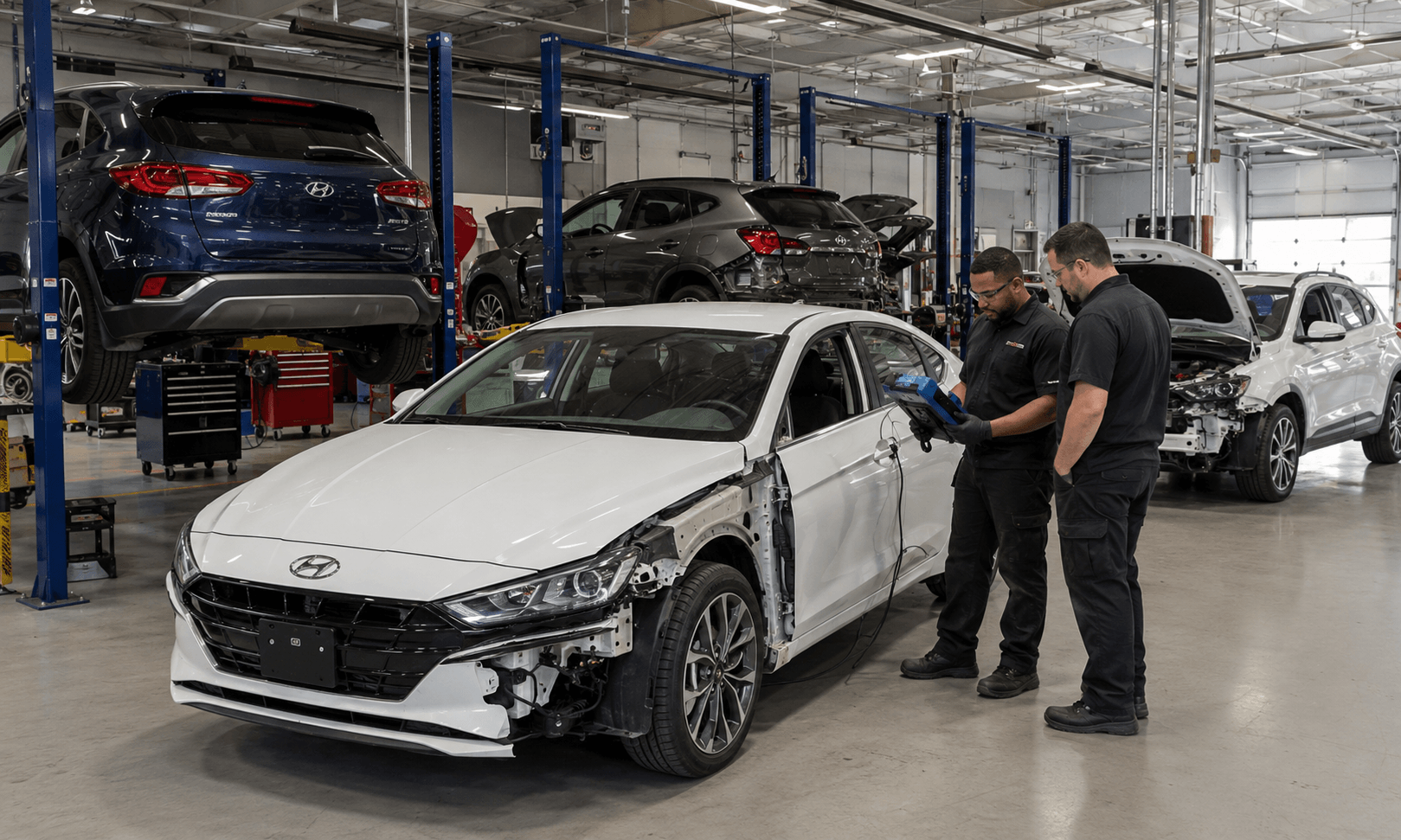
A standard shop may fix visible damage, but a factory-certified collision center follows strict manufacturer guidelines to restore your vehicle to its original safety and performance standards.
This difference affects:
- Crash safety performance
- Airbag and sensor accuracy
- Vehicle warranty protection
- Long-term resale value
Understanding certification helps you avoid incomplete or improper repairs.
What Is a Certified Collision Center?
A certified collision center is an auto body repair facility that has been officially approved by one or more vehicle manufacturers to perform repairs according to their exact standards.
These centers must meet strict requirements, including:
- Technician training and testing
- Use of manufacturer-approved repair procedures
- Investment in specialized equipment
- Ongoing audits and compliance checks
Unlike general auto body shops, a certified facility must maintain compliance with OEM standards at all times.
In simple terms:
A certified collision center is trusted by the manufacturer to repair its vehicles correctly after an accident.
How Factory Certifications Work (OEM Programs)
Factory certification programs are created by vehicle manufacturers to ensure proper auto body repair after collisions. Each manufacturer (such as Mercedes-Benz, Audi, or Volkswagen) sets its own requirements for repair facilities. Shops must apply and qualify for certification.
To become a factory-certified collision center, a shop typically must:
- Employ manufacturer-trained technicians
- Use OEM-approved tools and equipment
- Follow strict repair documentation processes
- Pass regular inspections and audits
- Maintain updated training as vehicle technology evolves
These programs ensure that modern vehicles with ADAS (Advanced Driver Assistance Systems), aluminum structures, and electronic safety features are repaired correctly.
Benefits of Choosing a Certified Repair Facility
Choosing a certified collision center instead of a general collision repair center provides several important benefits.
Correct OEM Repair Procedures
Certified facilities follow OEM (Original Equipment Manufacturer) repair guidelines. This ensures your vehicle is repaired exactly as the manufacturer intended.
Proper repair procedures help maintain:
- Structural integrity
- Crash safety performance
- Sensor and calibration accuracy
Factory-Trained Technicians
Technicians at a certified facility undergo continuous training directly from manufacturers.
This training covers:
- Model-specific repair techniques
- New vehicle technologies
- Structural repair methods
- Safety system recalibration
Factory-trained technicians are better equipped to handle modern vehicle complexity compared to general repair shops.
Genuine OEM Parts
A key requirement of a certified collision center is the use of OEM parts whenever required.
OEM parts are:
- Designed specifically for your vehicle
- Tested for safety and durability
- Guaranteed to fit correctly
Using genuine parts helps ensure your vehicle performs as it did before the accident, unlike aftermarket alternatives that may vary in quality.
Preserve Warranty & Resale Value
One of the most overlooked benefits of choosing a factory-certified collision center is warranty protection. Many manufacturers require certified repairs to maintain warranty coverage. Improper repairs at non-certified shops can sometimes affect warranty claims.
In addition, certified repairs help preserve:
- Vehicle resale value
- Structural integrity history
- Buyer confidence during resale
This is especially important for newer or luxury vehicles.
Which Brands Certify Collision Centers?
Many major automakers operate their own certification programs for collision repair centers. At K&H Automotive, we proudly meet certification requirements for several leading brands, including:
- Mercedes-Benz Certified Collision Repair
- Audi Certified Collision Repair
- Volkswagen Certified Collision Repair
Each brand has its own strict standards, ensuring repairs meet factory specifications for safety, performance, and appearance. These certifications confirm that the shop is trusted to repair complex modern vehicles correctly.
K&H Automotive — Hamilton NJ’s Certified Collision Center
K&H Automotive is a trusted certified collision center in Hamilton, NJ, serving drivers throughout Mercer County with high-quality, manufacturer-approved repairs. We combine advanced technology with factory-trained expertise to deliver accurate, safe, and reliable auto body repair center.
What sets us apart:
- Multiple OEM certifications
- Skilled, factory-trained technicians
- Advanced diagnostic and calibration equipment
- Precision structural repair capabilities
- Direct insurance coordination support
- Commitment to safety and quality standards
Whether your vehicle requires minor dent repair or full structural restoration, our team ensures every repair meets strict manufacturer guidelines.
How to Verify a Shop’s Certifications
Before choosing a repair facility, it’s important to verify whether it is truly a certified collision center.
Here’s how you can check:
- Look for official manufacturer logos and certifications
- Visit the shop’s website certification pages
- Ask which OEM programs they are enrolled in
- Confirm technician training credentials
- Check if certifications are up to date
A reputable shop will always be transparent about its certifications and repair standards. If a shop cannot clearly prove its factory certifications, it may not meet OEM repair requirements.
Conclusion
Choosing the right certified collision center is not just about repairing your vehicle; it’s about protecting your safety, warranty, and investment. Unlike a standard collision repair center, a factory-certified facility follows strict manufacturer guidelines, uses OEM parts, and employs trained technicians who understand modern vehicle technology.
If you want reliable auto body repair in Hamilton, NJ, choosing a certified facility like K&H Automotive ensures your vehicle is repaired the right way the first time.
See Our Certifications
Explore our manufacturer-approved repair programs and see why drivers across New Jersey trust K&H Automotive.
FAQs
1. What is a certified collision center?
A certified collision center is a repair facility approved by vehicle manufacturers to perform repairs using OEM-approved methods, tools, and parts.
2. Is a certified collision center better than a regular body shop?
Yes. Certified centers follow strict manufacturer guidelines, ensuring safer, more accurate, and warranty-compliant repairs.
3. Does insurance cover repairs at certified collision centers?
Yes. Insurance companies typically cover repairs at certified shops, and in New Jersey, you have the right to choose your repair facility.
4. Why are OEM parts important in collision repair?
OEM parts are designed specifically for your vehicle, ensuring proper fit, safety, and long-term durability.
5. How do I know if a shop is truly certified?
You can verify certifications through the shop’s website, manufacturer listings, or by asking for proof of OEM program enrollment.